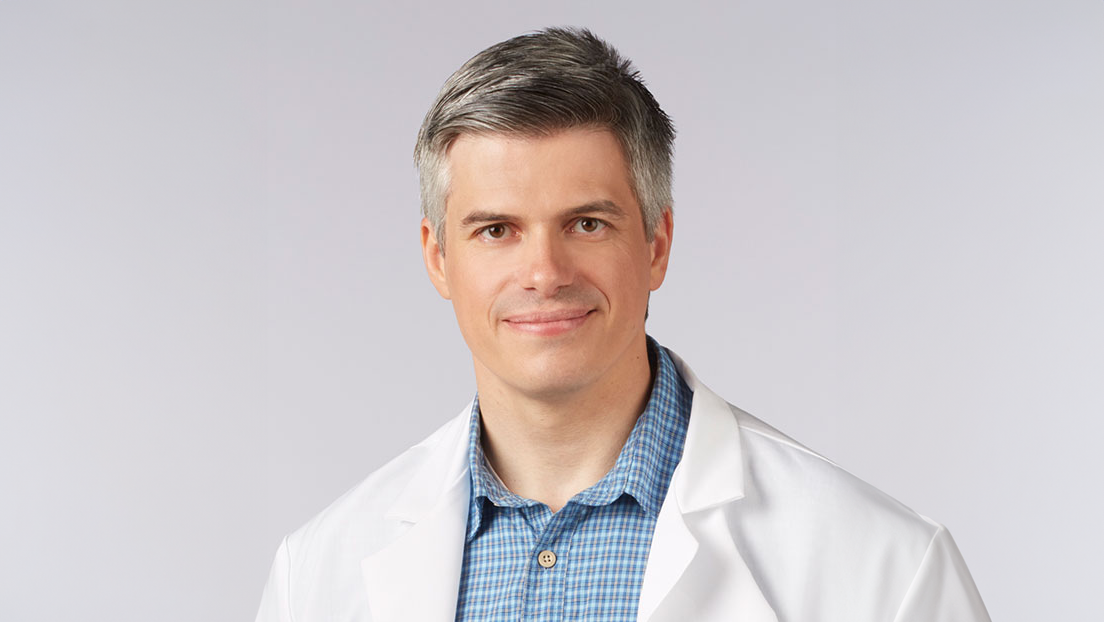
Join us for the Distinguished Lunenfeld-Tanenbaum Research Institute Lecture with
Panos Roussos
Professor
Departments of Psychiatry and of Genetics and Genomic Sciences
Icahn School of Medicine at Mount Sinai
Talk Title:
Decoding Cell-Type-Specific Mechanisms in the Human Brain to Guide Therapeutic Discovery
Abstract:
Neuropsychiatric and neurodegenerative disorders remain challenging to treat due to their clinical and molecular heterogeneity, as well as limited mechanistic insight into disease biology. In this seminar, I will present our integrative framework that combines multi-ancestry human genetics with single-cell and spatial genomics to resolve cell-type-specific regulatory mechanisms in the human brain. By leveraging fine-mapping across diverse populations and integrating gene expression, epigenomic, and spatial transcriptomic data, we identify convergent biological pathways and prioritize causal genes within disease-associated loci. These approaches enable a shift from association to mechanism, paving the way for precision, mechanism-driven therapeutic discovery across brain disorders.
Speaker Profile:
Panos Roussos is a Professor of Psychiatry and Genetics and Genomic Sciences at the Icahn School of Medicine at Mount Sinai and Director of the Pamela Sklar Division of Psychiatric Genomics. He is a member of Icahn Institute for Data Science and Genomic Technology and Friedman Brain Institute. He is also a VA/MIRECC Research Physician at the James J. Peters VA Medical Center. He received his medical and doctorate degrees from the University of Crete in Greece and he completed his residency in Psychiatry (research track) at Icahn School of Medicine at Mount Sinai followed by a MIRECC research fellowship in schizophrenia. His early research focused on the genetic exploration of intermediate cognitive phenotypes, including the prepulse inhibition of the startle reflex in human subjects and restoration of deficits using a pharmacogenomic approach. During his residency in psychiatry (Physician-Scientist Research Track) at Icahn School of Medicine at Mount Sinai, he worked on human postmortem studies by integrating genomics with gene expression and gene network approaches. His research focuses on the integration of high-dimensional data, such as genomic, epigenomic, and transcriptomic, using advanced biostatistical methods in order to identify some of the mechanisms through which risk genetic variants increase the risk for neuropsychiatric diseases.
Poster

