
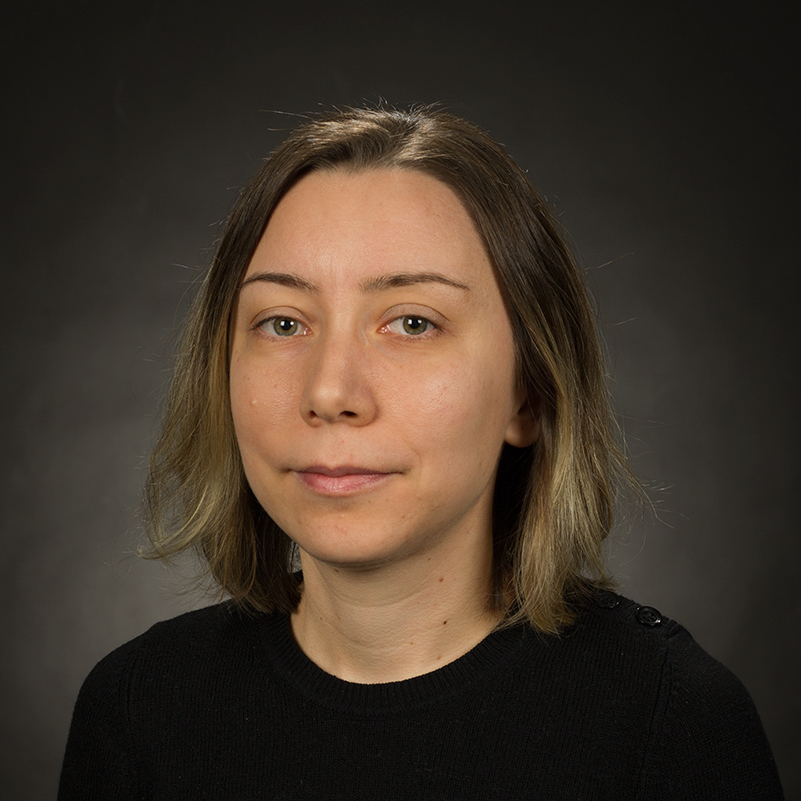
STAGE Welcomes PhD Trainee Ummay Nayeema Islam
Ummay Nayeema Islam Selected as a Trainee Under the STAGE Program. STAGE Atlantic is pleased to announce that Ummay Nayeema Islam has been selected as
STAGE Atlantic is a formal and comprehensive training program spanning Genetic Epidemiology, Population Genetics and Statistical Genetics. Trainees will explore how genes, traits, and populations interact across space, time, and environments. Career development opportunities will be made available that are designed to address critical workforce shortages in these disciplines both in Canada and globally.
The program has academic requirements, but it is not a degree-granting program. Trainees who complete the STAGE Atlantic Trainee program will receive a “STAGE Atlantic Certificate”.
STAGE Atlantic is currently supported by unique training environments at University of Dalhousie Faculties of Science, Computer Science and Medicine, Memorial University Faculties of Science and Medicine, and Genome Atlantic.
The Regional Leads are responsible for the overall administration of the STAGE Atlantic program including curriculum, seminars, trainee recruitment, and admissions.


Application deadline extended to November 15, 2025
Trainees will engage in a research project, supported by mentors and an enhanced curriculum, that equips them with the skills to develop and tweak cutting edge methodologies for the analysis of data, with concentration in one (or more) of the following:
In Atlantic Canada, the STAGE program will extend to population genetics in marine animals, synergizing with Dalhousie’s recognized excellence in ocean research.
Successful applicants will receive an enriched training experience, including the following opportunities:
The STAGE Research Themes are available here.
Candidates are responsible for selecting, contacting, and securing the commitment of at least two STAGE mentors to jointly supervise them in their project, one of whom will be referred to as their “Primary STAGE mentor” and will communicate with STAGE Atlantic.
The Primary STAGE mentor must confirm in writing their commitment to supervise the candidate’s STAGE-related research and to meet with the candidate and co-mentor(s) at least four times per year. Although candidates must secure these commitments at the application stage, obtaining them does not guarantee admission to STAGE Atlantic.
STAGE Atlantic emphasizes interdisciplinary representation among the mentors, so please ensure that your mentors have complementary research interests and expertise, and justify your choices in your one-page document on the inter- and cross-disciplinary aspects of your proposal.
STAGE will offer admission to successful applicants at the following stages of their education or career:
Candidates must demonstrate exceptional academic performance and fulfill all requirements applicable to their level, as indicated in the table below.
| Eligibility Requirements | Ph.D. Students 1 | Postdoctoral Fellows 2, 3 |
|---|---|---|
| A. Identify, approach, and engage a Primary Mentor from the STAGE Atlantic mentor roster. | X | X |
| B. Obtain a nomination from your Primary STAGE Atlantic Mentor. | X | X |
| C. Be enrolled in a doctoral program. | X | |
| D. Have a background or research interest in one of the following disciplines: Epidemiology, Biostatistics, Statistics, Mathematics, Molecular and Forensic Anthropology, Computer Science, or closely related fields. This includes quantitatively inclined branches of the life sciences such as Genetics, Bioinformatics, Computational Biology, and Psychology. Applicants from other relevant research areas may also be considered (see “Examples of Research Themes,” above). | X | X |
1. Accepted Ph.D. students must meet the academic requirements of their doctoral program and STAGE, and must remain full-time students throughout their participation in the program.
2. Preference will be given to postdoctoral applicants with three years or less of postdoctoral experience at the time of application.
3. STAGE emphasizes strong quantitative skills. Applicants whose disciplines are not listed above, or whose research is not directly aligned with STAGE’s Research Themes, must include in their application a compelling explanation of their qualifications—supported by experience and documented through examples of their work.
Candidates must assemble all of the following documents and upload* them to the application form.
Only the primary mentor’s letter is to be completed and submitted online by the mentor. It is the candidate’s responsibility to ensure that their application is complete and submitted online by the competition deadline.
*Candidates do not need to send in hard copies of their supporting documents.
1. Summary of Proposed Research Project
2. Inter- and cross-disciplinary nature of proposed research project
3. PDF of up-to-date Canadian Common CV (CIHR Biosketch CV) or the newest Tri-agency CV.
4. Letter from the Primary STAGE Mentor
5. Graduate and/or undergraduate transcripts, as required
Electronic copies for all transcripts are acceptable. Single PDF file.
6. Supplementary Information
Postdoctoral Fellows Only
STAGE Atlantic Trainees will attend the STAGE International Speaker Seminar Series.
Some of these seminars will be co-hosted in Atlantic Canada with support from the Beatrice Hunter Cancer Research Institute, The Centre for Genomics Enhanced Medicine, and Dalhousie University’s Department of Pathology. Trainees and mentors together will attend the national STAGE Journal Club.
Upon receipt of the application, an acknowledgment of receipt will be emailed to the applicant.
Trainees are required to provide a written report (after a minimum of 18 months) describing their mentor meetings, seminars attended, and relevant courses taken (or audited).
Esther Berzunza, Program Manager, CANSSI Ontario
Email: esther.berzunza@utoronto.ca
STAGE Atlantic has a stellar team of ~20 highly collaborative, multidisciplinary mentors. View the full mentor roster.
View our course selections here.







Ummay Nayeema Islam Selected as a Trainee Under the STAGE Program. STAGE Atlantic is pleased to announce that Ummay Nayeema Islam has been selected as

Melis Erkan Selected as a Trainee Under the STAGE Program. STAGE Atlantic is pleased to announce that Melis Erkan has been selected as a STAGE

Jonathan Babyn Selected as a Trainee Under the STAGE Program. STAGE Atlantic is pleased to announce that Jonathan Babyn has been selected as a STAGE